Materials
How we state figures, and what they do not mean
Every material card on this site carries the same seven fields. This page defines each one, explains where the numbers come from, and is explicit about what we are not telling you.
The statement this site is built on
We do not describe what we sell with adjectives about the environment. Not the ones about the climate, not the ones about the planet, and not the ones that imply a benefit without a measurement behind them.
What we publish instead is three things you can check: the recycled percentage by weight, the type of material that percentage came from, and whether an independent body has certified it — with the reference, where one exists. Those are facts about a supply chain. What they are worth is a judgement, and it is yours to make, not ours to make for you.
French law regulates environmental claims in commerce closely, and rightly so. We have chosen to go further than the law requires by removing the vocabulary altogether — not because it is forbidden, but because we could not evidence it if you asked.
01
The recycled percentage
The figure is the proportion of recycled fibre in the finished article, by weight. It is not a proportion of the fabric, not a proportion of one component, and not a proportion of the collection.
It must equal the sum of the recycled entries in the composition label. That is checked automatically when the site is built: if the headline figure and the label disagree by a single point, the build fails and the article cannot be published. The number you read is therefore the number sewn into the garment, by construction rather than by proofreading.
Where an article has several components with different contents — a shell and a wadding, for instance — each is listed separately and the headline figure is the whole-garment weighted total. The quilted gilet reads 92% for exactly that reason: its shell is 100% recycled and its wadding is 80%.
Where an article contains no recycled fibre at all, it says nought. It is not left blank, not omitted, and not moved somewhere less visible. 12 of our 42 articles read nought per cent.
02
Post-consumer and post-industrial
These are two different inputs, and merging them into one word would hide the thing most worth knowing.
- post-consumer
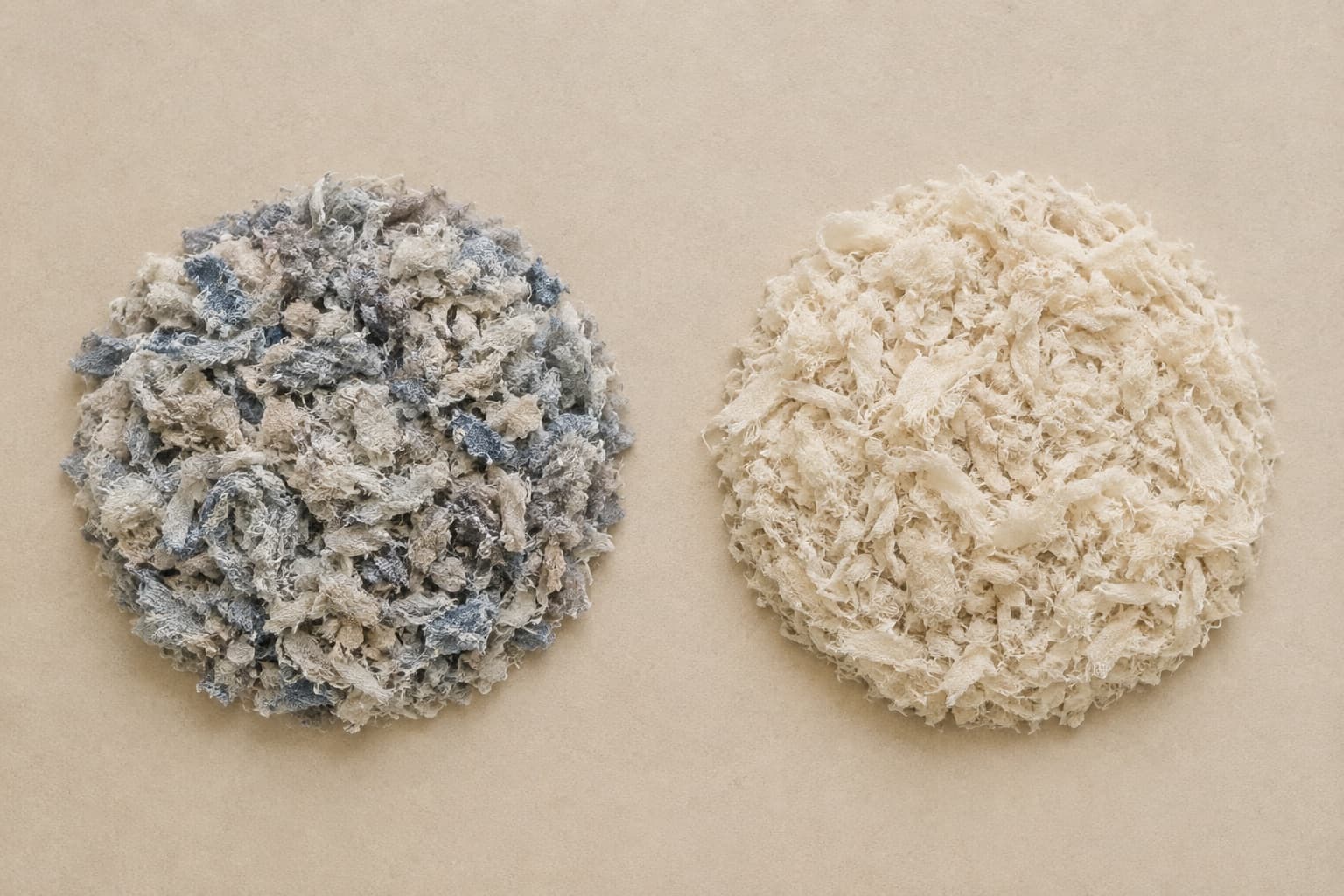
- Material collected after somebody used it and finished with it: garments returned through collection points, or PET bottles. It arrives mixed in colour, mixed in fibre and variable in condition, so it takes more sorting and more processing.
- post-industrial
- Material collected inside the factory, before it ever reached a customer: offcuts from the cutting table, waste from spinning and knitting. It arrives clean, single-fibre and consistent in colour, so it processes more predictably.
We are often asked which is better. We do not answer that, because the honest answer depends on what you are weighing and we do not know what you are weighing. One diverts material that had reached the end of a life; the other is more consistent and produces a more reliable garment. Both are recycled content. Neither is presented here as superior to the other, and you will not find one described in warmer words than the other anywhere on this site.
03
Certified, or supplier-declared
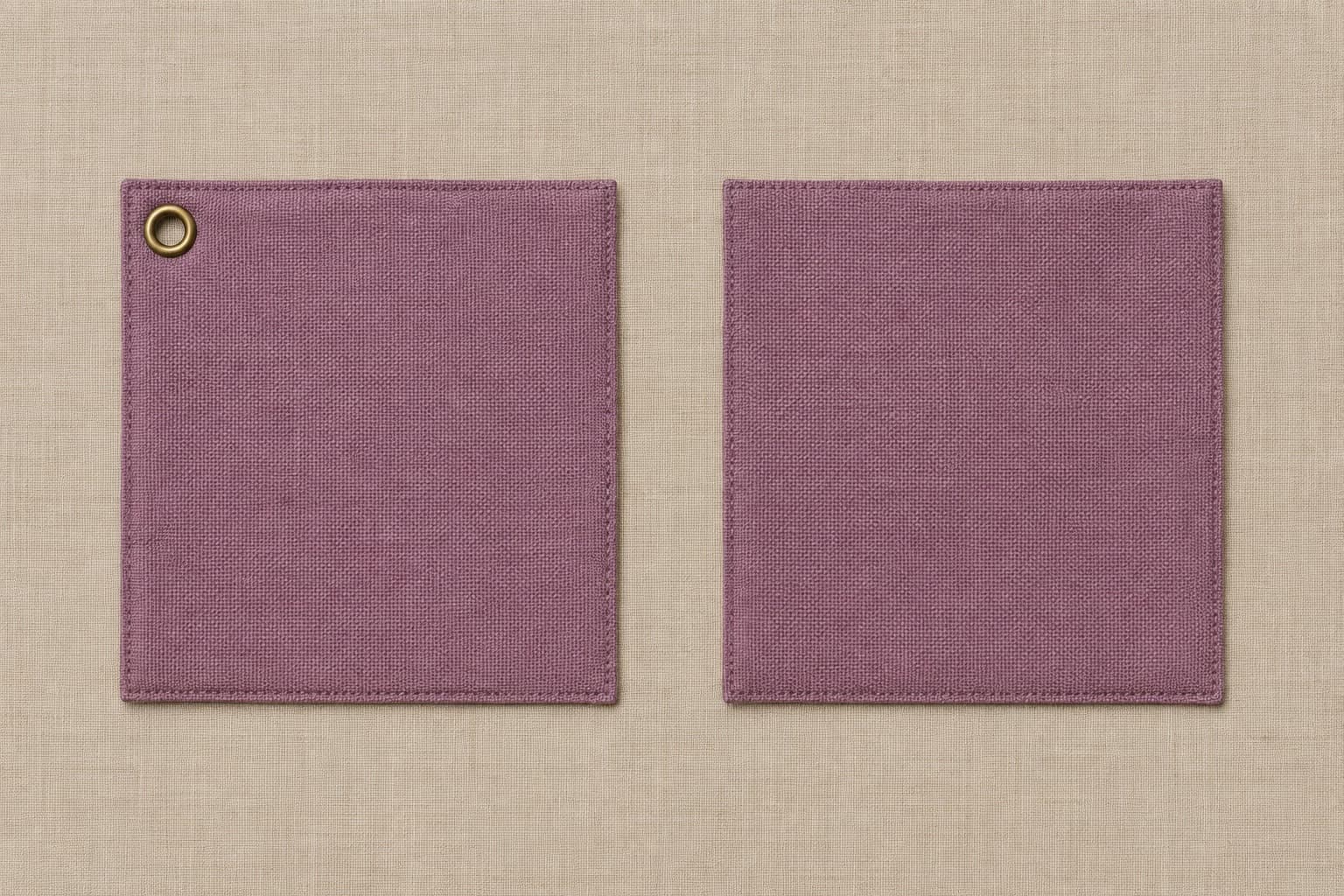
A certification standard tells you that an independent body has examined the chain of custody and issued a certificate. The certificate has a reference, and the reference can be checked with the body that issued it. Without the reference, the name of the standard is decoration.
So this site applies a hard rule: no reference, no standard name. Where we do not hold a certificate reference for an article, the material card reads supplier-declared and the name of the standard does not appear anywhere on the page. That rule is enforced in the rendering code — there is no path through the software that prints a standard name without a reference beside it.
supplier-declared means our supplier has told us the percentage and the source type, and we have not had that verified by a third party. It is not worthless — it is a contractual statement from a named supplier — but it is a weaker thing than certification and we label it as the weaker thing.
As of today, 42 of our 42 articles read supplier-declared and 0 carry a published certificate reference. When a reference is issued we publish it, and the article's card changes on the same day.
How to check a reference
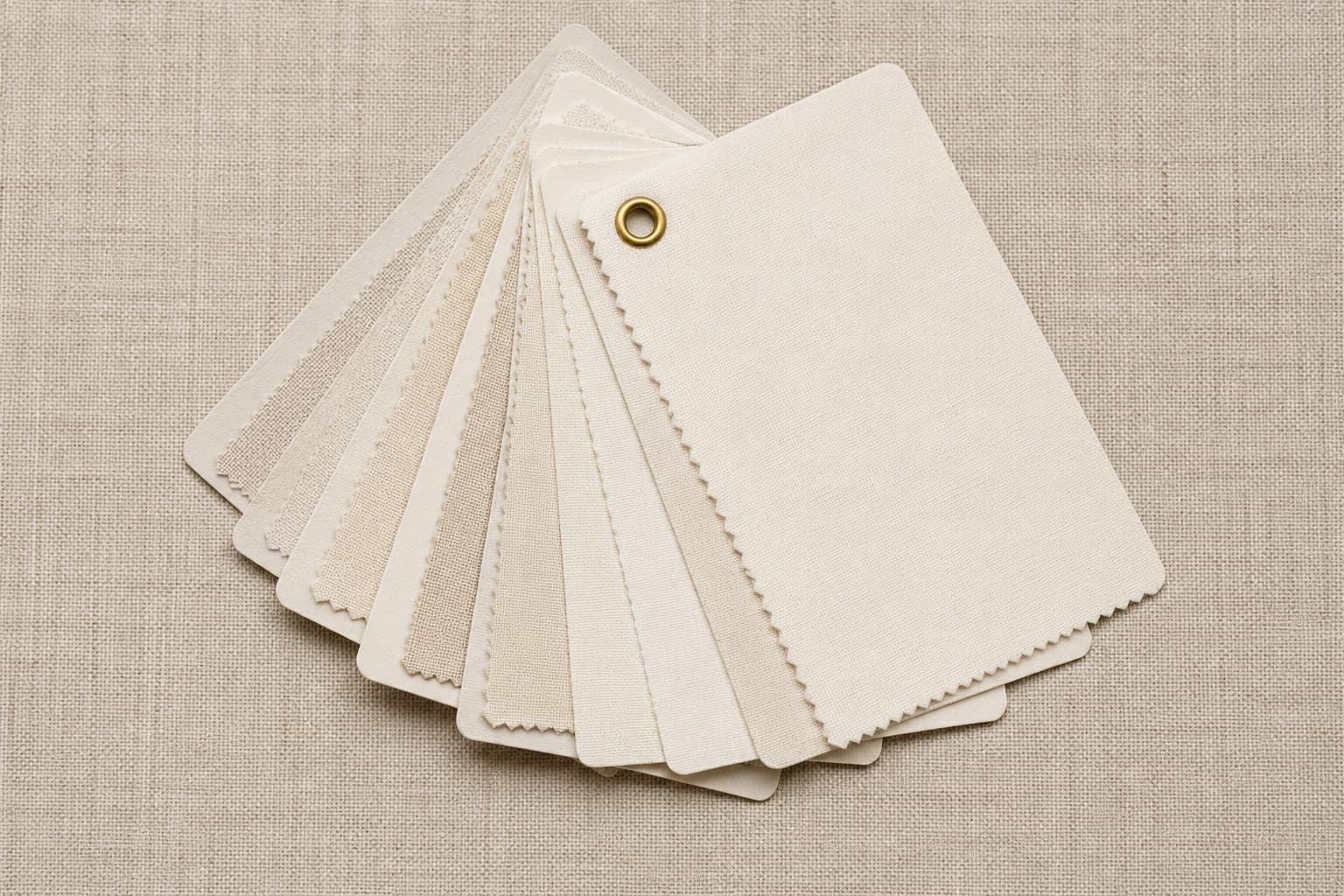
Where a reference is published on a material card, the issuing body is published beside it. Certification bodies maintain public registers of valid certificates: take the reference to the issuing body named on the card and it will confirm the scope, the holder and the expiry date. You do not have to go through us to do it, and you should not have to take our word for it.
If a reference does not check out, tell us at support@ecclo.store and we will take the article down while we establish why.
04
How recycled fabric behaves differently
Recycled fibre is not identical to virgin fibre, and a site that publishes percentages without saying so is telling you half the story. Every product page carries a field headed “how this material differs”, and it is never left vague.
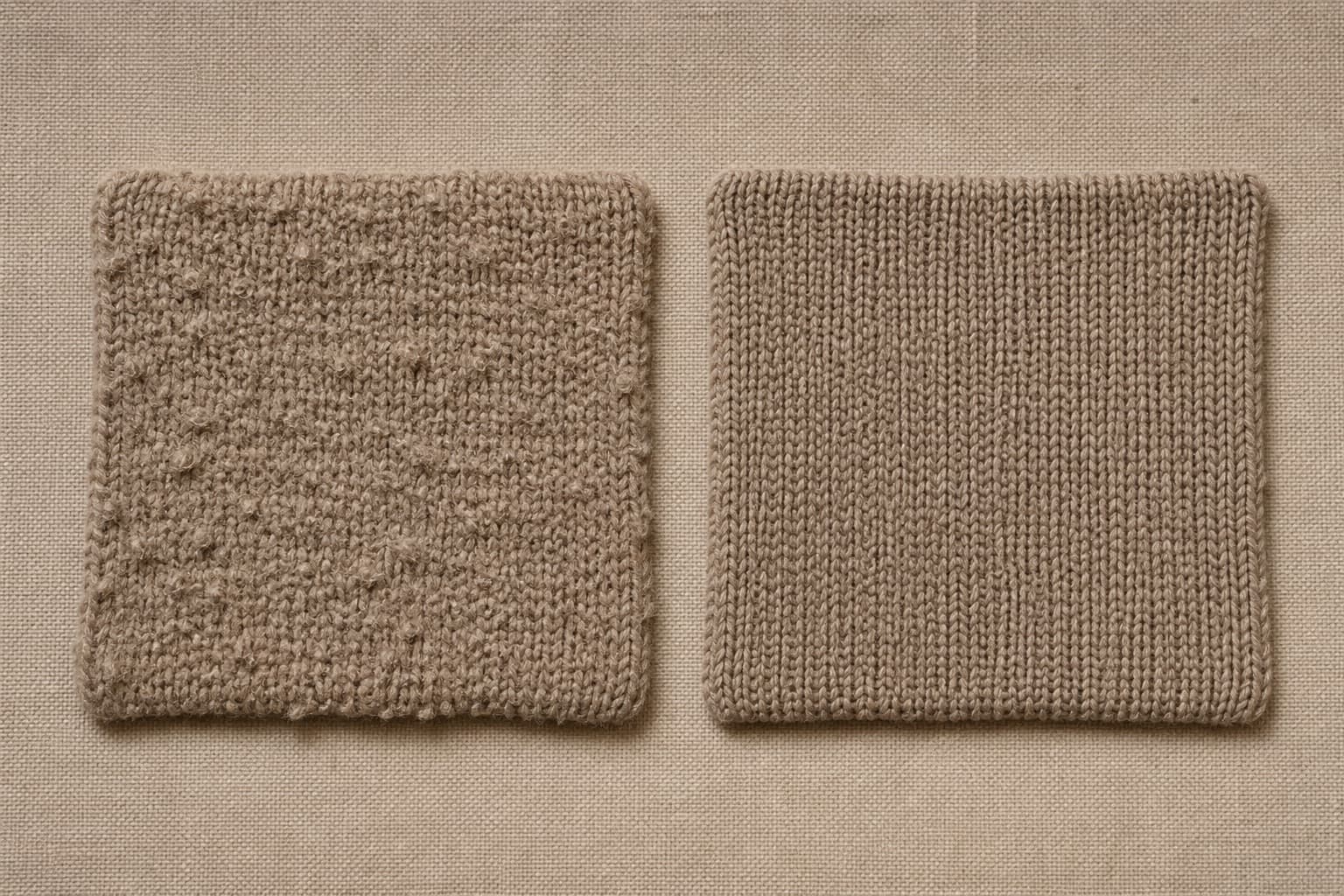
Mechanical recycling tears fabric back into fibre, and every pass shortens the staple. A shorter staple means a weaker yarn, so it is blended with virgin fibre to hold strength — which is why almost nothing in the cotton and wool lines is 100% recycled. It also means more surface fuzz, earlier pilling at points of friction, and a less even face in raking light.
Re-carded wool sheds during its first wears and pills sooner at the underarm and cuff. Recycled cotton in a sock — the hardest-worn thing in a wardrobe — thins at the heel before a virgin-cotton sock would. Recycled polyester filament carries slightly more variation in denier, which reads as faint streaking across large flat panels. All of that is written on the relevant product pages, before you buy rather than after.
Polyester of any origin releases microfibres in the wash. We state that on the polyester articles because it is a property of the material. We do not claim that a laundry bag solves it, because we have not measured that.
05
Deadstock is not recycled
Deadstock is finished cloth that already existed. It was woven, finished, and then sat in a warehouse instead of being sold. Making a garment from it involves no reprocessing of any fibre, so its recycled content is nought — and that is what its material card says.
We are explicit about this because the two are frequently sold as though they were the same thing. They are not. One reuses a fibre; the other uses cloth that was already made. Calling deadstock recycled would be untrue, so we do not.
What is true of a deadstock article is that it is finite. Each is a single production run against the rolls that existed, the unit count is printed on the card, and when it sells out it is not remade — not as a scarcity tactic but because the cloth is gone.
Offcut articles are the same principle at a smaller scale: panels cut from what was left at the cutting table. No two are arranged identically, so the one you receive will not match the photograph. That is stated on those product pages too.
06
What is deliberately absent
There is no impact figure on this site — no water saved, no emissions avoided, no comparison against a conventional garment. Producing one honestly requires a lifecycle assessment of this specific supply chain, and we have not commissioned one. Quoting an industry average and attaching it to our articles would be inventing a number, which is worse than having none.
There is no take-back scheme and no points programme. Both would require us to claim something about what happens to a garment after it leaves us, and we cannot verify that.
There is no certification badge in the header, no seal in the footer and no logo of any standards body anywhere on this site. Where certification exists, it appears as a reference on the article it applies to, and nowhere else.
If any of that changes — if an assessment is commissioned, or a certificate issued — it will appear as a figure with a source attached, on the article it belongs to.